...

バスケットストレーナー

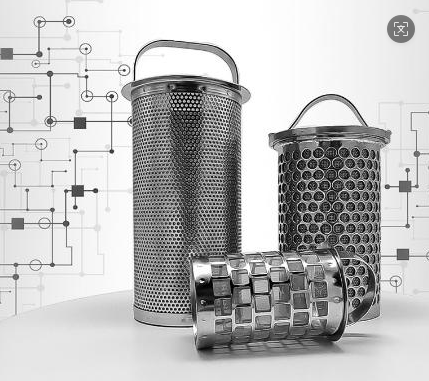
A basket filter is a pipeline fluid filtration device that uses a filter basket to intercept fixed particles, protecting downstream pumps, valves, and instruments. Its core filter element is a cylindrical filter basket made of welded steel plates or woven mesh, encased in a carbon steel or stainless steel shell. I. Structural Components
A complete basket filter includes a cylinder, filter basket, flange, and sealing gaskets.

1. Cylinder (also called shell or tank): The main part of the filter, installed on the inner wall of the pipe, while the filter basket is installed inside the cylinder to perform the main filtration work.
2. Filter basket (filter screen): The core filtration element. It is usually made of metal perforated plate, metal woven mesh (such as carbon steel, stainless steel, Hastelloy), or sintered mesh. Different mesh sizes or openings can be selected according to the required filtration precision.

3. Flange (Top Cover): Allows opening of the cylinder for periodic cleaning or filter basket replacement. Connects to the cylinder flange via bolts through the flange openingsand is equipped with a sealing gasket.II: Working PrincipleUnfiltered fluid from the pipeline enters the cylinder through the filter inlet. The inner wall and bottom of the filter basket intercept solid particles larger than the basket’s pore size, achieving solid-liquid separation. The filtered fluid exits through the outlet and flows into downstream pipelines and equipment. During continuous operation, impurities accumulate inside the basket.III: Key Features1. Simple Structure: Minimal components for easy disassembly and operation.2. Large Filtration Area: The basket structure provides a significantly larger filtration area, typically 2-3 times the cross-sectional area of the pipeline.3. Targeted Application: Primarily used in industrial fluid filtration equipment to prevent contaminants from entering downstream pumps, valves, and instruments.4. Cost-Effective: Utilizes readily available materials, minimizes material usage, and offers low production costs.5. Easy Maintenance: Simply open the top cover to clean or replace the filter basket.Technical Parameters1. Working Pressure: 0.2-10MPa2. Flow Rate: 1m³/h-1000m³/h3. Nominal Diameter: DN25-DN10004. Operating Temperature: -80℃-500℃5. Filtration Accuracy: 5 mesh-1000 mesh6. Housing Material: Carbon Steel, 304 Stainless Steel, 316 Stainless Steel7. Filter Basket Material: Carbon Steel, 304 Stainless Steel, 316 Stainless Steel, Hastelloy, Monel, and other nickel-based alloys8. Gasket Material: PTFE (Polytetrafluoroethylene), Viton (Fluoroelastomer), NBR (Nitrile Rubber)

Filter basket specifications

Filter basket material

Carbon steel, stainless steel, nickel-based alloys (Hastelloy, Monel)

Filter basket structure

Perforated plate, perforated plate + woven mesh, sintered mesh

Filter basket specifications

Φ100mm × 200mm and Φ150mm × 300mm are custom-made according to customer needs.

多孔性

Standard requirement: ≥35%, High requirement: ≥50%

Basket mouth shape

Flat-mouth filter basket and slanted-mouth filter basket

フィルタリング精度

50-200μm

最高使用温度

300℃-400℃

work pressure

5MPa

Four: Application areas

Basket filters are standard equipment in industrial piping systems.

1. Petrochemicals: Filter crude oil, refined oil, and solvents.

2. Water treatment: Serve as coarse pre-filtration for pumps to protect them.

3. Power generation: Used in boiler feedwater and cooling water systems.

4. HVAC: Filter circulating cooling water and chilled water.

5. Food and pharmaceuticals: Employ sanitary-grade stainless steel filters to meet hygiene requirements.

6. Natural Gas & Fuel Gas: Filters rust, dust, and other impurities from pipelines.

V. Service Life

Varies based on filtered fluid type and operating conditions. The housing can be used long-term, while the filter basket—the core filtration element—should be replaced as needed due to impurity clogging or mesh wear.

VI. Routine Maintenance

Always ensure equipment is powered off before performing regular cleaning or replacing the filter basket. Safety comes first.

VII: Selection Principles

How to select a satisfactory basket filter? Consider three key factors: inlet/outlet diameter, pressure rating, and mesh size.

1. Inlet/Outlet Diameter

Must match the inlet pipe diameter and should not be smaller than the pump inlet diameter.

2. Nominal Pressure

The pressure rating of the basket filter is determined by the maximum pressure likely to occur in the pipeline.

3. Filter Mesh Size: Select the appropriate filtration precision based on the size of the impurities to be intercepted, and then choose according to the filter mesh size and precision conversion table.

Overall, basket filters are efficient, economical, and reliable primary or high-precision filtration devices, an indispensable component for protecting critical industrial equipment and ensuring stable process operation.